
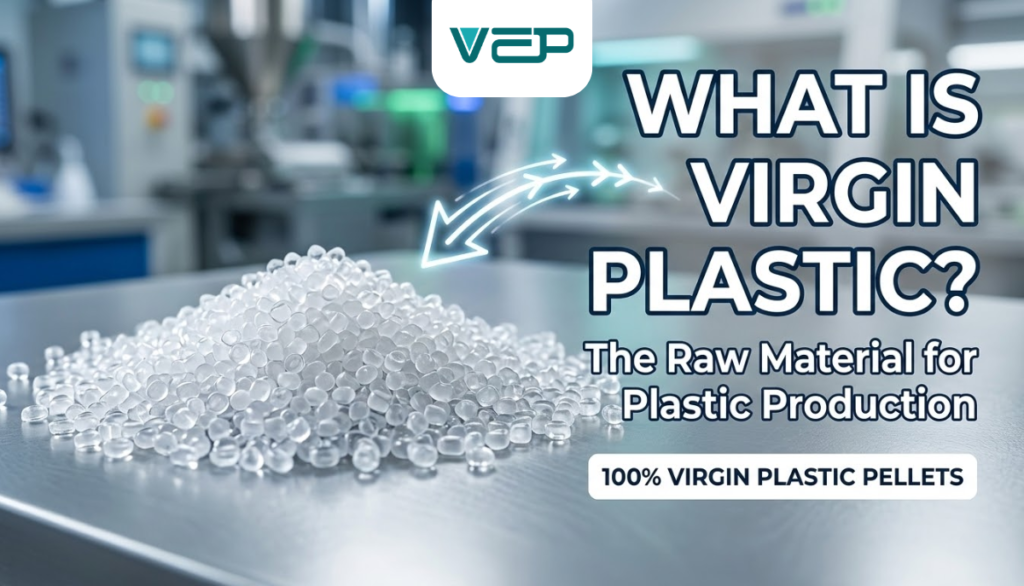
What is Virgin Plastic?
In the plastics manufacturing industry, virgin plastic is a widely used material across various sectors such as electrical & electronics, home appliances, packaging, and engineering components. However, many businesses still do not fully understand the nature of this material or when it should be used instead of recycled plastic.
This article will help you understand what virgin plastic is, its key characteristics, and its common applications in industrial production.
What is Virgin Plastic?
Virgin plastic is a type of plastic produced directly from primary petrochemical sources such as crude oil or natural gas, without undergoing any prior recycling process. After being synthesized in petrochemical plants, virgin plastic is typically formed into plastic pellets with high purity and stable physical properties. Some common types of virgin plastics on the market include:
- ABS
- PP (Polypropylene)
- PE (Polyethylene)
- PS (Polystyrene)
- PA (Nylon)
- POM
- PC
Thanks to its stability and high purity, virgin plastic is often used in products that require high quality and durability.
Characteristics of Virgin Plastic
Compared to other plastic materials, virgin plastic has several outstanding characteristics.
1. High purity
Virgin plastic has not been recycled, so it does not contain impurities, ensuring consistent quality during production.
2. Excellent mechanical properties
Products made from virgin plastic typically offer:
- high mechanical strength
- good impact resistance
- high flexibility and stability
This helps reduce the risk of cracking or breaking during use.
3. Natural color
Virgin plastic pellets are usually transparent white or milky white, making them easy to color using masterbatch or pigments.
4. Easy processing
Virgin plastic maintains high stability in common manufacturing processes such as:
- injection molding
- extrusion
- blow molding
Applications of Virgin Plastic in Manufacturing
Thanks to its superior properties, virgin plastic is widely used across many industries.
1. Home appliance industry
Many products are made from virgin ABS or PP to ensure durability and aesthetics, such as:
- washing machine housings
- fan housings
- vacuum cleaner casings
- electrical components
2. Electrical & electronics industry
Virgin plastic is used in components that require precision and good insulation, such as:
- electrical device housings
- sockets
- electronic components
3. Packaging and consumer products
Virgin PE and PP are commonly used to produce:
- plastic packaging
- food containers
- plastic bottles
4. Engineering components
Engineering-grade virgin plastics such as PA, POM, and PC are used in:
- machinery components
- industrial equipment
- mechanical parts
What is the difference between virgin plastic and recycled plastic?
| Criteria | Virgin Plastic | Recycled Plastic |
|---|---|---|
| Origin | Produced directly from petrochemical sources | Recycled from used plastic products |
| Purity | High | Lower |
| Mechanical properties | Stable | May degrade after multiple recycling cycles |
| Cost | Higher | Lower |
| Applications | High-quality products | Less demanding applications |
In practice, many manufacturers combine virgin plastic with recycled plastic or compound plastic to optimize costs while maintaining product quality.
When should you use virgin plastic?
Virgin plastic is typically chosen when products require:
- high durability
- material stability
- user safety
- high-quality surface finish
Industries that commonly prioritize virgin plastic include:
- electrical & electronics
- home appliances
- engineering products
- food packaging
Trend: Combining Virgin and Recycled Plastics
Today, many manufacturers are moving toward solutions that combine virgin plastic with recycled or modified plastics. This approach helps:
- reduce production costs
- optimize material performance
- minimize environmental impact
It is also a growing trend in the plastics industry as companies focus more on sustainability and circular economy practices.
Need consultation on the right plastic material?
Choosing the right material is crucial to optimizing production costs and ensuring product quality. If you are looking for:
- virgin plastic
- recycled plastic
- compound plastic
- masterbatch
VEP’s technical team is ready to provide expert consultation and recommend the most suitable material solutions for your application. Contact VEP today for professional plastic material support.
Frequently Asked Questions about Virgin Plastic
Is virgin plastic safe?
Virgin plastic has high purity and contains minimal impurities, making it widely used in both consumer and industrial products.
Is virgin plastic more expensive than recycled plastic?
Yes. Virgin plastic is generally more expensive because it is produced directly from petrochemical raw materials and offers more stable quality.
Can virgin plastic be mixed with recycled plastic?
Yes. In many applications, manufacturers mix these materials to balance cost and performance.
Can virgin plastic be recycled?
Yes. After use, virgin plastic can be collected and recycled into recycled plastic for further applications.
When should recycled plastic be used instead of virgin plastic?
Recycled plastic is suitable for products that do not require high mechanical or aesthetic performance, helping businesses reduce costs and environmental impact.
Pingback: Nhựa tái sinh là gì? – VEP
Pingback: Nhựa Tái Sinh khác gì với Nhựa Nguyên Sinh? – VEP
Pingback: What is the Difference Between Recycled Plastic and Virgin Plastic? – VEP