
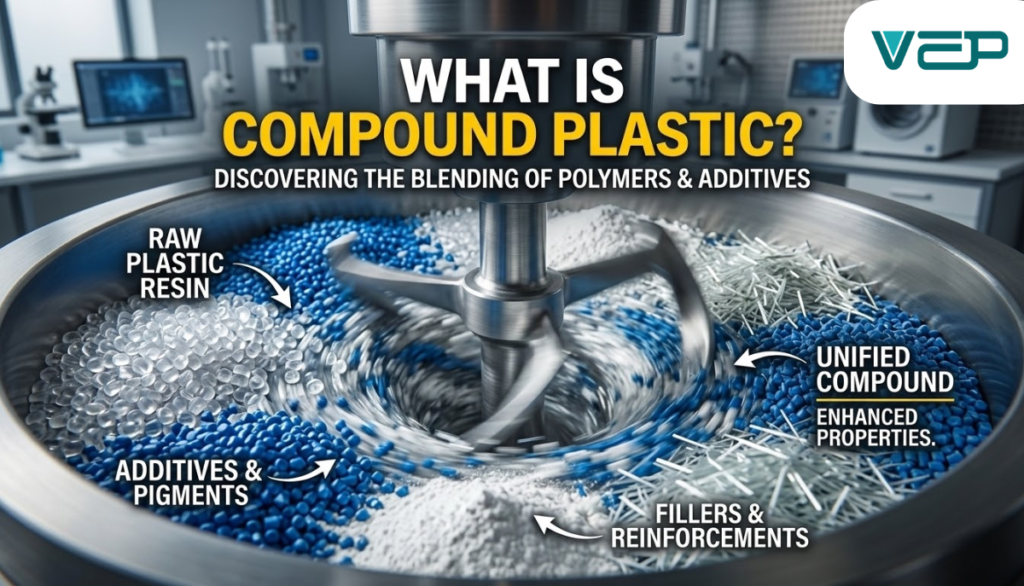
What is Compound Plastic?
In many industrial applications, conventional plastics are not sufficient to meet technical requirements. That is why compound plastics are increasingly being used.
Why are compound plastics becoming more widely used?
In modern plastic manufacturing, many products require more than just standard plastic materials. They often demand enhanced technical properties such as:
- heat resistance
- high mechanical strength
- flame retardancy
- UV resistance
- anti-static properties
These requirements make basic plastics insufficient in many cases. This is the main reason why compound plastics are increasingly adopted across various industries.
What is compound plastic?
Compound plastic is a type of material created by blending a base polymer with additives, reinforcements, or fillers to enhance or modify its properties. During the compounding process, these components are thoroughly mixed using an extruder system, then processed into plastic pellets for use in manufacturing processes such as:
- injection molding
- extrusion
- blow molding
By adjusting the formulation, manufacturers can create materials tailored to specific application requirements.
Characteristics of compound plastics
Customizable material properties
One of the biggest advantages of compound plastics is the ability to tailor material properties based on specific requirements. By adjusting the ratio of additives or reinforcements, compound plastics can achieve:
- higher strength
- improved heat resistance
- flame retardant properties
- UV resistance
This allows the material to meet various technical standards.
Production consistency
Compound plastics are typically produced using controlled formulations and processes, which helps:
- ensure consistent quality across production batches
- reduce processing defects
- maintain stable material properties
Optimized product performance
Thanks to the combination of polymers and additives, compound plastics can enhance the performance of final products, such as:
- improved impact resistance
- reduced product weight
- longer component lifespan
Advantages of compound plastics
Material design flexibility
Compound plastics allow manufacturers to create a wide range of materials with different properties for specific applications, such as:
- flame-retardant compounds for electrical equipment
- heat-resistant compounds for home appliances
- glass fiber reinforced compounds for engineering components
Cost optimization
In some cases, using compound plastics can help businesses optimize production costs thanks to better material efficiency and performance balance.
Suitable for multiple industries
Compound plastics are widely used in various industries, including:
- electrical & electronics
- home appliances
- lighting
- automotive engineering
- industrial products
Applications of compound plastics in manufacturing
Home appliance industry
Compound plastics are commonly used to produce:
- appliance housings
- heat-resistant plastic components
- structural parts
Electrical & electronics industry
Plastic components in electronic devices often require:
- electrical insulation
- flame resistance
- high mechanical strength
Compound plastics effectively meet these requirements.
Engineering industry
In engineering applications, compound plastics are used to manufacture:
- plastic gears
- mechanical components
- load-bearing parts
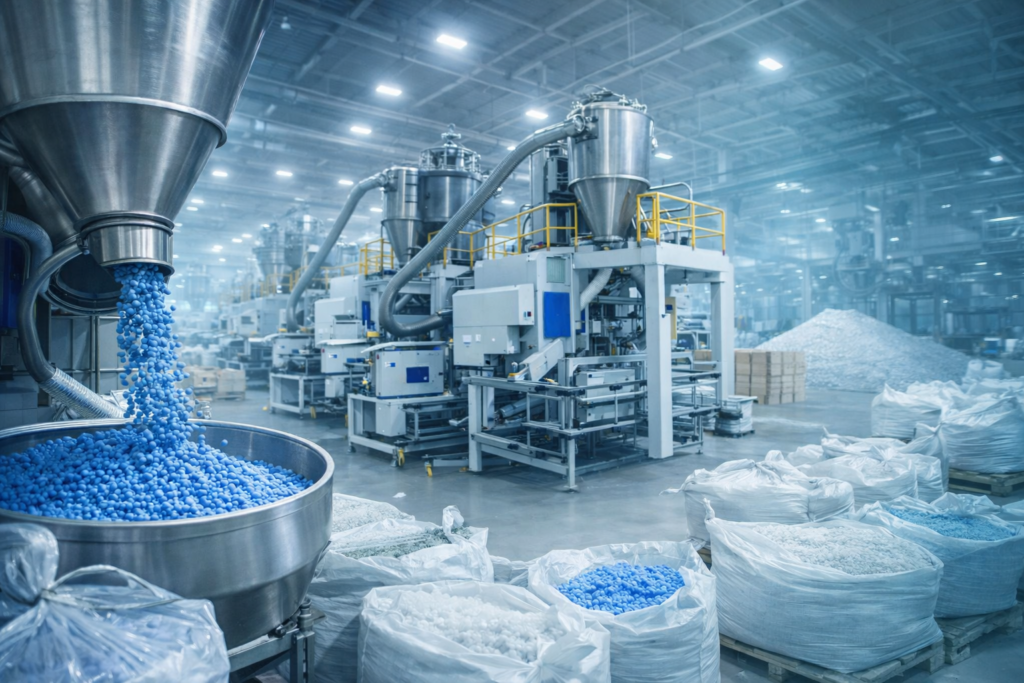
How do compound plastics differ from other types of plastics?
| Criteria | Virgin Plastic | Recycled Plastic | Compound Plastic | Modified Plastic |
|---|---|---|---|---|
| Origin | Produced directly from petrochemical raw materials (oil or natural gas) | Recycled from post-consumer plastic products or scrap | Polymer blended with additives or reinforcements based on specific formulations | Plastic whose properties are improved by adding additives or modifying structure |
| Purity | Very high | Lower due to possible impurities | Depends on formulation | Depends on polymer and additives |
| Customization capability | Low (fixed properties) | Low | High – properties can be tailored | High – focuses on improving specific properties |
| Quality consistency | Very stable | May vary depending on source | Stable if formulation is controlled | Stable but depends on modification process |
| Cost | Highest | Lowest | Medium to high | Medium to high |
| Typical applications | High-quality products, engineering parts, electronics | Packaging, general plastic products, household items | Engineering parts, electrical equipment, automotive, home appliances | Products requiring special properties such as flame retardancy, heat resistance, anti-static |
| Examples | ABS, PP, PA, POM | Recycled ABS, Recycled PP | PP compound, ABS compound | Flame-retardant ABS, glass fiber reinforced PP |
In simple terms:
- Virgin plastic is “original” plastic produced from petrochemical plants.
- Recycled plastic is reprocessed from used plastic products.
- Compound plastic is plastic blended with additives to create new properties.
- Modified plastic is plastic whose properties are enhanced (e.g., flame resistance, heat resistance, or increased strength).
In practice, modified plastics are often produced in compound form, as compounding ensures uniform mixing of polymers and additives.
When should you use compound plastics?
Compound plastics are typically selected when products require:
- specific material properties
- high durability
- heat resistance or flame retardancy
For engineering applications, compound plastics are often more effective than virgin or recycled plastics.
Choosing the right plastic material plays a critical role in product quality and production efficiency.
If your business is looking for compound plastics or recycled materials suitable for your application, VEP’s technical team is ready to provide consultation and tailored material solutions. Contact VEP today for expert support on your plastic material needs.
Frequently Asked Questions about compound plastics
Is compound plastic the same as modified plastic?
In many cases, compound plastic is the result of polymer modification through the addition of additives or reinforcements.
Is compound plastic more expensive than virgin plastic?
The price of compound plastic depends on its formulation and the type of additives used. Some compounds may be more expensive, while others can help optimize overall production costs.
Can compound plastics be recycled?
In many cases, compound plastics can still be recycled. However, the recycling process may affect certain material properties.